Calmer Euro Summers: Chic European Escapes Without the Crowds
Last update: August 18th, 2026 · Curated by THE FINE CIRCLE
Europe in summer isn’t “too popular.” It’s just too synchronized. Everyone arrives on the same weekends, heads to the same three neighbourhoods, and then wonders why a simple lunch reservation feels like applying for citizenship.
The good news is that you don’t need to abandon the icons to get the calm back. The quietest, chicest summers are often hiding inside famous places—one bay over, one valley inland, one neighbourhood away from the selfie circuit. This is our approach: keep the romance, keep the standards, delete the chaos.
Crowds don’t distribute evenly. They pool around the same pinch points: the “main” beach, the old town strip, the obvious viewpoint, the hotel that became a hashtag. The luxury move is to stay close enough to enjoy the destination, but not so close that you’re living inside its busiest mood.
Think of it as travelling to “Amalfi Coast, but not that Amalfi,” or “Mallorca, but not the version everyone posts.” Same beauty, better pace, far less noise.
How we curated this edit
We don't recommend from a distance. Every place in this edit has been experienced firsthand by THE FINE CIRCLE. We pair those visits with trusted local knowledge and independent research, then keep the list tight. The result: places we genuinely believe are worth your time. Think of it as the places we'd actually send a friend to.
The Riviera, rewritten: Saint-Tropez energy without the Saint-Tropez crush
The Côte d’Azur can be a circus in peak season—unless you treat it like a coastline, not a single town. The calm version is to base yourself where privacy is built in: a tucked-away peninsula, a protected stretch of sand, a property that behaves like a private house rather than a lobby scene.
La Réserve Ramatuelle is the archetype of this strategy: close enough to dip into the Riviera’s glamour, far enough to return to silence, sea air, and that rare feeling that nobody is looking at you. It’s the kind of place where “luxury” means your day is uninterrupted—breakfast that doesn’t feel like a public buffet, pools that don’t feel like a stage, service that reads minds and then disappears.
We'd go for: a quieter Riviera that still feels unmistakably French, Cap d’Antibes is often the better base than the obvious hotspots. It’s still classic, still storied, but inherently less frantic—especially if you choose a stay that’s anchored in gardens, not nightlife.

Amalfi, but calmer: the coast’s most beautiful secret is that you can step inland
The Amalfi Coast’s problem isn’t beauty; it’s compression. Roads, beaches, viewpoints—all funnelled into the same narrow ribbon. The calm version is to treat the coast as your view, not your entire itinerary.
In practice, that means basing yourself somewhere that gives you the Amalfi aesthetic without the Amalfi bottlenecks. Ravello has always been the elegant answer—airier, quieter, more terrace-and-music than traffic-and-queues. Even more effective is the inland strategy: stay among vineyards and hills, then visit the coast like a day trip rather than a daily endurance sport.
We'd go for: if you want an Italian summer that feels like summer used to feel—long lunches, slow evenings, no crowd choreography—Umbria is still one of the best decisions you can make, and Reschio is the kind of hotel that turns “quiet” into an atmosphere you can physically feel. You’re still getting Italy’s romance and craftsmanship, just without the coastal stampede.

Greece without the performance: the islands the crowd hasn’t fully converted into a product
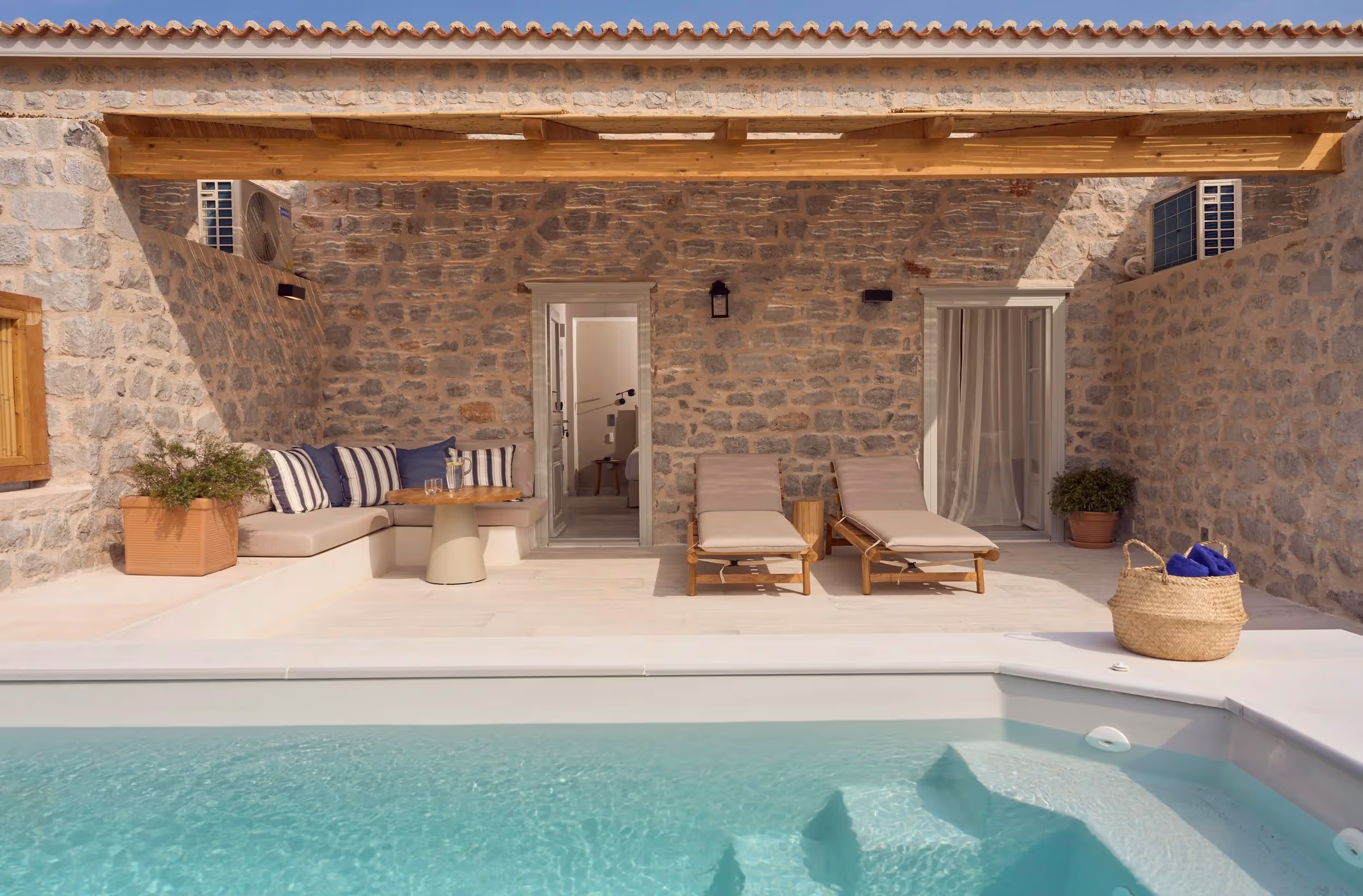
Greece is crowded in the places that have become shorthand—Santorini sunsets, Mykonos nightlife. The calmer Greece is still Greek in the most satisfying way: salt air, white stone, boat days, proper tavernas, slow afternoons. It’s just not built around mass arrival patterns. This is where islands like Hydra (car-free, quietly glamorous) and Patmos (spiritual, understated, deeply beautiful) do something rare: they feel elevated without trying.
On Hydra, Mandraki Beach Resort gives you that breezy, contained “I’m staying somewhere tasteful” feeling without dragging you into the town’s loudest orbit.
Italy’s chic “no-crowds” summer: Puglia and the art of space
If you want Italy in summer but hate Italy in peak-tourist mode, Puglia is a brilliant compromise: it’s iconic enough to feel like a real destination, but spread out enough that it doesn’t collapse into one overcrowded strip.
The luxury version of Puglia is estate-led and slow: countryside stays, beach clubs that aren’t trying to be viral, towns that come alive in the evening without feeling staged. Borgo Egnazia is the obvious flagship, but the real magic is the region itself—its scale gives you room to breathe.

Mallorca, but discreet: the island is not the problem, the hotspots are
Mallorca suffers from a branding issue: people assume it’s only beach clubs and crowds. The truth is the island is a patchwork of different moods, and some of them are gloriously quiet—especially in the interior and on the slower coasts.
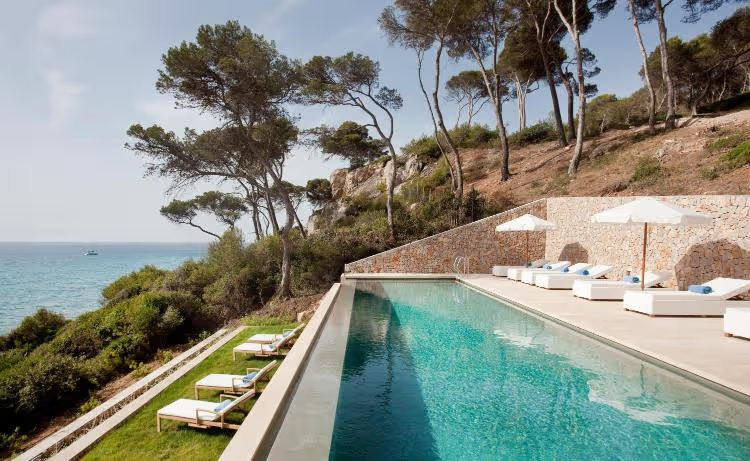
We'd go for: if your Mallorca fantasy includes stone villages, olive groves, and a sense of privacy rather than a sense of nightlife, the luxury move is to base yourself where the landscape is the headline. Hotels that behave like estates—where you wake up to countryside stillness and only enter “the scene” if you feel like it—are what make Mallorca feel like a secret again. One of our favorites is Can Simoneta.
Discover our full Mallorca guide with our favorite gems: restaurants, visits, hotel and more!
Portugal’s soft-luxury coast: Comporta and Melides, the grown-up answer to peak summer
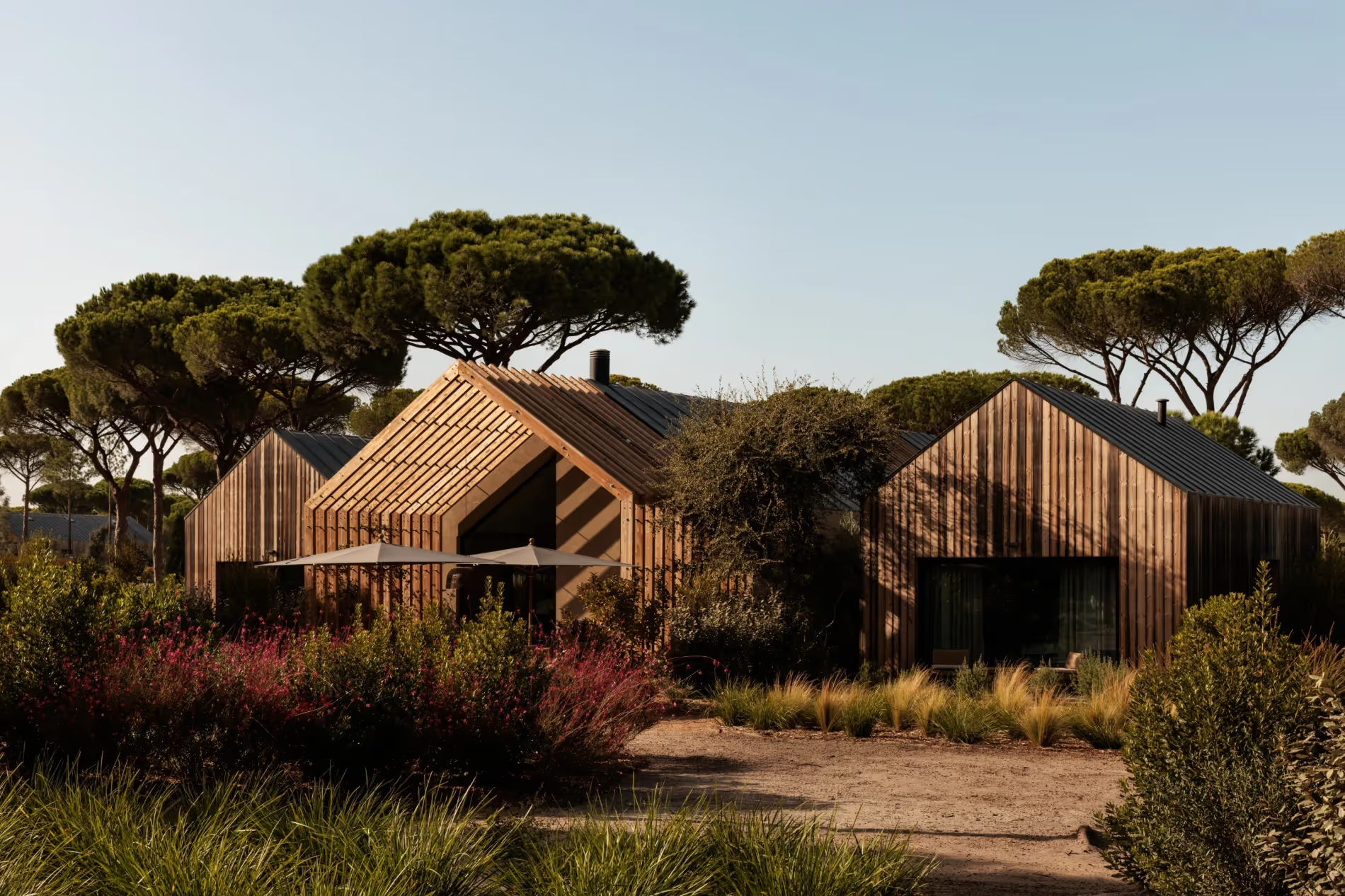
Portugal has one of Europe’s most compelling quiet-luxury corridors right now, and it’s not in the obvious city-break zones. Comporta and Melides are the kind of coastal escape luxury travelers fall in love with because it’s beautiful and unbothered: low-rise, nature-forward, design-led, and socially discreet.
This is a place where chic doesn’t mean loud. It means linen, long lunches, and the kind of beach that still feels like a beach, not a managed attraction. Sublime Comporta is an anchor stay for that vibe: a property that understands privacy as a feature, not a preference.
Austria’s quiet summer secret: Alpine luxury
Austria is one of the easiest ways to do a European summer that still feels polished—because the country’s luxury isn’t built on beach-club noise, it’s built on fresh air, impeccable hospitality, and landscapes that naturally decongest your brain.
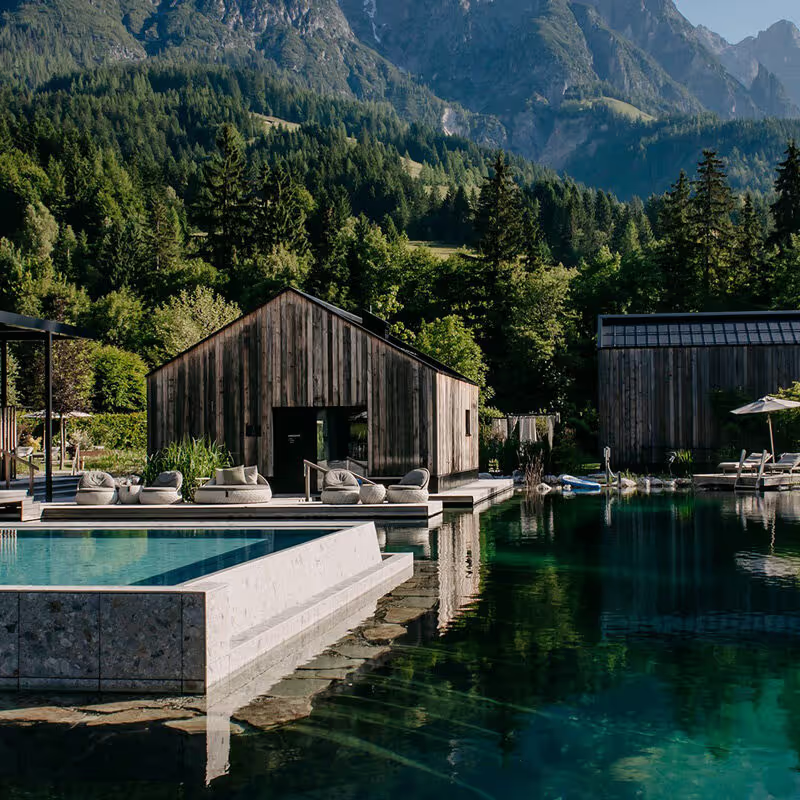
A perfect example is Naturhotel Forsthofgut in Leogang: set right at the edge of forest and meadow with the Leogang mountains as a backdrop, it’s the kind of place where calm feels engineered (in the best way), from its huge garden area and natural swimming lake to its spa culture that’s deeply Alpine rather than “wellness as a marketing concept.”
We'd go for: serious restoration for adults and a genuinely well-thought-out family set-up—so the overall atmosphere stays relaxed instead of chaotic.
A destination can be famous and still feel empty if your hotel is designed to keep you insulated from the busiest parts of the experience. This is what quiet luxury actually is: fewer keys, thoughtful arrivals, soundproofing that’s treated like a luxury material, staff who understand discretion, and spaces that don’t force everyone into the same public loop at the same time. The difference between a calm summer and a chaotic one is often one decision: a hotel that behaves like a private world.
You don’t need to flee to somewhere obscure to have a calmer summer. You just need to travel like someone with taste and a low tolerance for nonsense.
Choose the quieter corner of the famous place. Choose hotels that protect peace. Choose a summer that feels empty in the best way—like the world has been turned down, and you’ve been turned back on.